
Zoccer Casino beschreibt eine neue Generation digitaler Unterhaltungsplattformen, die klassische Spielideen mit moderner Technologie verbinden. In einer Zeit, in der Online-Erlebnisse zunehmend den Alltag prägen, entsteht ein virtueller Raum, der Spannung, Komfort und Innovation miteinander vereint. Nutzer erwarten heute mehr als nur einfache Spiele. Sie suchen ein umfassendes Erlebnis, das visuell überzeugt, technisch stabil läuft und gleichzeitig abwechslungsreiche Inhalte bietet. Genau diese Erwartungen versucht Zoccer Casino in einer modernen digitalen Umgebung zu erfüllen offizielle zoccer casino website. Der Grundgedanke hinter Zoccer Casino basiert auf der Transformation traditioneller Spielkultur in eine digitale Form. Während klassische Spielstätten stark an physische Orte gebunden sind, eröffnet die digitale Variante neue Möglichkeiten der Flexibilität und Zugänglichkeit. Die Plattform verfolgt das Ziel, ein realistisches Gefühl von Unterhaltung zu schaffen, ohne die Einschränkungen eines physischen Raums. Dieser Ansatz spiegelt den allgemeinen Wandel in der Unterhaltungsbranche wider. Immer mehr Aktivitäten verlagern sich in digitale Räume, in denen Nutzer unabhängig von Zeit und Ort teilnehmen können. Zoccer Casino steht exemplarisch für diese Entwicklung und verbindet klassische Spielatmosphäre mit moderner Online-Technologie. Ein zentrales Element von Zoccer Casino ist die Benutzerfreundlichkeit der Plattform. Das Design ist darauf ausgelegt, eine klare Orientierung und ein angenehmes Nutzungserlebnis zu ermöglichen. Nutzer sollen ohne lange Einarbeitung verstehen, wie sie sich auf der Plattform bewegen und welche Möglichkeiten ihnen zur Verfügung stehen. Die visuelle Gestaltung spielt dabei eine entscheidende Rolle. Farbkonzepte, Animationen und Layouts sind so abgestimmt, dass sie ein harmonisches Gesamtbild erzeugen. Gleichzeitig wird darauf geachtet, dass die Oberfläche nicht überladen wirkt. Stattdessen entsteht ein ausgewogenes Zusammenspiel zwischen Ästhetik und Funktionalität, das die Nutzung angenehm und intuitiv macht. Zoccer Casino bietet eine breite Palette an Spielmöglichkeiten, die unterschiedliche Interessen abdecken. Diese Vielfalt ist ein wichtiger Bestandteil der Plattform, da sie dafür sorgt, dass Nutzer immer wieder neue Erfahrungen machen können. Die Spiele unterscheiden sich in Tempo, Komplexität und Stil. Einige Inhalte setzen auf schnelle Entscheidungen und unmittelbare Ergebnisse, während andere ein strategisches Vorgehen erfordern. Diese Mischung ermöglicht es den Nutzern, je nach Stimmung und Vorlieben unterschiedliche Arten der Unterhaltung zu wählen. Durch diese Vielfalt entsteht eine dynamische Umgebung, in der keine monotone Wiederholung entsteht. Stattdessen bleibt das Erlebnis abwechslungsreich und motivierend. Die technische Grundlage von Zoccer Casino spielt eine entscheidende Rolle für die Qualität der Plattform. Moderne digitale Systeme sorgen dafür, dass Inhalte schnell geladen werden und reibungslos funktionieren. Stabilität und Leistung sind dabei zentrale Faktoren, die das gesamte Nutzererlebnis beeinflussen. Ein weiterer wichtiger Aspekt ist die Anpassungsfähigkeit der Technologie. Digitale Plattformen müssen in der Lage sein, sich kontinuierlich weiterzuentwickeln. Neue Funktionen, verbesserte Grafiken und optimierte Prozesse können so integriert werden, ohne das bestehende System zu stören. Diese Flexibilität ist entscheidend für langfristigen Erfolg in der digitalen Unterhaltungsbranche. In einer digitalen Umgebung ist Sicherheit ein unverzichtbarer Bestandteil. Zoccer Casino legt großen Wert auf den Schutz von Nutzerdaten und die Gewährleistung einer sicheren Plattformstruktur. Durch moderne technische Maßnahmen wird sichergestellt, dass persönliche Informationen geschützt bleiben und keine unbefugten Zugriffe stattfinden. Neben der technischen Sicherheit spielt auch das Vertrauen der Nutzer eine wichtige Rolle. Eine transparente und zuverlässige Umgebung ist entscheidend dafür, dass sich Nutzer wohlfühlen und regelmäßig zurückkehren. Deshalb wird besonderer Wert auf faire Abläufe und klare Strukturen gelegt. Zoccer Casino ist nicht nur eine Plattform für Spiele, sondern ein umfassendes Unterhaltungserlebnis. Der Fokus liegt darauf, Emotionen zu erzeugen und eine immersive Umgebung zu schaffen. Nutzer sollen sich in eine digitale Welt hineinversetzt fühlen, die Spannung und Abwechslung bietet. Dabei geht es nicht nur um einzelne Spiele, sondern um das Gesamtgefühl der Plattform. Jede Interaktion trägt dazu bei, ein konsistentes Erlebnis zu schaffen, das sowohl visuell als auch funktional überzeugt. Diese ganzheitliche Herangehensweise unterscheidet moderne Plattformen deutlich von früheren digitalen Angeboten. Digitale Unterhaltungsplattformen wie Zoccer Casino haben auch eine gesellschaftliche Bedeutung entwickelt. Sie spiegeln den Wandel wider, wie Menschen Freizeit gestalten und miteinander interagieren. Immer mehr soziale Aktivitäten finden in digitalen Räumen statt, die neue Formen der Verbindung ermöglichen. Diese Entwicklung führt dazu, dass Unterhaltung nicht mehr nur individuell erlebt wird, sondern auch Teil einer größeren digitalen Gemeinschaft ist. Nutzer teilen Interessen, Erfahrungen und Erlebnisse in einer Umgebung, die global zugänglich ist. Ein wichtiger Aspekt moderner Online-Unterhaltung ist der verantwortungsvolle Umgang mit digitalen Angeboten. Zoccer Casino unterstützt diesen Ansatz, indem es Nutzer dazu ermutigt, bewusst und kontrolliert zu interagieren. Verantwortung bedeutet in diesem Zusammenhang, ein gesundes Gleichgewicht zwischen digitaler Unterhaltung und Alltag zu bewahren. Nutzer sollen die Plattform als Freizeitangebot verstehen und entsprechend achtsam nutzen. Diese Perspektive trägt dazu bei, dass das Erlebnis langfristig positiv bleibt. Die Zukunft von Plattformen wie Zoccer Casino ist eng mit technologischen Innovationen verbunden. Fortschritte in Bereichen wie künstliche Intelligenz, virtuelle Realität und interaktive Systeme werden die digitale Unterhaltung weiter verändern. Es ist zu erwarten, dass zukünftige Plattformen noch stärker personalisierte Inhalte bieten und noch realistischere Erlebnisse schaffen werden. Die Grenzen zwischen realer und digitaler Unterhaltung werden zunehmend verschwimmen, wodurch neue Formen des Erlebens entstehen. Zoccer Casino steht stellvertretend für diesen Wandel und zeigt, wie digitale Plattformen sich kontinuierlich weiterentwickeln, um den steigenden Erwartungen der Nutzer gerecht zu werden. Zoccer Casino stellt eine moderne Form digitaler Unterhaltung dar, die Innovation, Design und technische Leistungsfähigkeit miteinander verbindet. Die Plattform bietet eine vielseitige Umgebung, die sowohl Einsteiger als auch erfahrene Nutzer anspricht. Durch die Kombination aus Benutzerfreundlichkeit, Vielfalt und technologischer Stabilität entsteht ein umfassendes digitales Erlebnis. Zoccer Casino zeigt damit, wie sich die Welt der Online-Unterhaltung verändert und welche Rolle moderne Plattformen in dieser Entwicklung spielen.Ursprung und Grundgedanke der Plattform
Gestaltung und Benutzerfreundlichkeit
Vielfalt der digitalen Spiele
Technologische Struktur und Leistung
Sicherheit und Vertrauensbasis
Erlebnisorientierte Unterhaltung
Gesellschaftliche Bedeutung digitaler Plattformen
Verantwortungsbewusster Umgang mit digitalen Inhalten
Entwicklung und Zukunft digitaler Unterhaltung
Fazit
Category: Automotive
20 TOP PIECES OF ADVICE FOR DECIDING ON THE SCEYE PLATFORM20 TOP PIECES OF ADVICE FOR DECIDING ON THE SCEYE PLATFORM
How Does Sceye's Stratospheric Airships Monitor Greenhouse Gases
1. The Monitoring Gap Is Larger than most people realize
Global greenhouse gas emissions are tracked by means of a plethora of ground stations as well as occasional flights by aircraft, and satellites that are operating hundreds of kilometres above the surface. Each has its limits. Ground stations are infrequent and geographically biased toward wealthy countries. Aircraft campaigns are expensive, short-duration, and narrow in coverage. Satellites are global in scope, however they aren't able to provide the spatial resolution needed to pinpoint specific emissions sources- leaky pipelines, a landfill releasing methane, or an industrial facility that does not report its output. This results in an oversight system that has major problems at the exact level where accountability and intervention are most important. Stratospheric platforms are becoming examined as the gaping middle layer.
2. Altitude Creates a Monitoring Advantage Satellites aren't able to duplicate
There's a logic behind why 20 kilometres beats 500 km for monitoring of emissions. An instrument operating at a stratospheric altitude could observe a ground footprint of several hundred kilometres but still close enough to recognize emission sources with meaningful precision — single facilities, road corridors, agricultural zones, and so on. Satellites looking at the exact region from the low Earth orbit can cover it more quickly but with less granularity, and revisit times mean a methane plume that appears and disperses within hours may never be able to be recorded at all. A platform that holds its position over a particular area for a period of days or weeks for a period of time converts random snapshots into continuous surveillance.
3. Methane Is the Most Important Target with a good reason
Carbon dioxide is the one that gets most of the media attention however methane is the greenhouse chemical where short-term monitoring improvements can make the most impact. Methane's effects are significantly greater than CO2 over the 20-year duration and a significant portion of methane emission from human activities comes from single sources — oil and gas infrastructure along with waste facilities and agricultural operations — that are both detectable and, often, repairable once identified. Real-time monitoring of methane emissions from a continuous stratospheric platform mean operators, regulators, and authorities can detect leaks before they occur, instead of discovering them later, through annual inventory reconciliations, which usually rely on estimates, not measurements.
4. Sceye's Airship Model is Built for the Monitoring Mission
What makes a great telecommunications system and an environmental monitoring system combine more than one might think. Both require long endurance as well as stable positioning and meaningful payload capacity. Sceye's lighter-than-air airship approach tackles all three. Since buoyancy is responsible for the primary mission of keeping the aircraft aloft it means the power budget isn't utilized by producing lift that it can be used for propulsion and powering the particular sensor is required for the mission. When it comes to monitoring greenhouse gases, specifically this means carrying spectrometers and imaging systems as well as data processing hardware that doesn't have the burdensome weight limitations that limit fixed-wing HAPS designs.
5. Station Keeping Must Be Non-Negotiable in order to collect important environmental data
Monitoring platforms that drift is a platform for monitoring that produces data that is difficult to understand. Knowing exactly where a sensor was when it took a reading is essential to attribute the source of the reading. The focus of Sceye's on real station keeper — a person who holds a fixed position above a desired area by active propulsion isn't just being a performance measure for technical reasons. It's the reason why the data is scientifically valid. Stratospheric earth observation can be essential for regulatory or legal applications when the locational record is sufficient to stand up to scrutiny. Drifting balloon platforms, no matter how competent their sensors are, won't offer that.
6. The Same Platform Can Monitor Oil Pollution and Wildfire Risques Similarly
One of the most interesting advantages of the multi-payload concept is that the various environmental monitoring tasks complement each other on an identical vehicle. Airships that operate over areas of offshore or coastal regions could have sensors that are calibrated to monitoring oil pollution as well as monitoring CO2 or methane. Over land, the exact platform architecture provides wildfire detection technology, which identifies heat signatures, smoke plumes as well as vegetation stress indicators which can precede ignition incidents. Sceye's approach to mission design doesn't consider them as separate programs that require separate aircraft but as use cases in parallel of infrastructure that's already placed and operational.
7. The ability to detect Climate Disasters in Real-Time Changes the Response Equation
There's an essential difference between knowing a wildfire started in the last six hours, and knowing it started a mere twenty minutes ago. The same is true of industrial accidents that release dangerous gases, flooding incidents inflicting damage to infrastructure, or abrupt methane emissions from permafrost. Detecting climate disasters in real timing from a recurrent stratospheric monitoring platform offers emergency managers along with government agencies and industrial operators with a window for intervention that simply does not occur when monitoring is based on satellite revisit cycles or ground-based reports. The value of that window grows as you think that the earliest stages of most environmental emergencies in the same timeframes when intervention is the most effective.
8. This Energy Architecture Makes Long Endurance Monitoring Viable
Environmental monitoring missions are only able to provide their full benefit if the platform remains on the station for long enough to create solid data records. A week's worth methane readings over an oil field tells you something. The continuous accumulation of data over months can tell the user something that can be implemented. The ability to sustain that endurance is dependent on solving the overnight energy problem -the platform should maintain enough power throughout daylight hours to run all of its systems throughout the night without losing position or sensor performance. New developments in lithium-sulfur battery chemical that have energy density of around 425 Wh/kg, combined with improving the efficiency of solar cells are what make a closed power loop attainable. In the absence of both these, durability is an aspiration, not a definition.
9. Mikkel Vestergaard's Biographical Background Explains The Environmental Emphasis
It's important to know why a stratospheric company in aerospace places such a obvious emphasis on greenhouse gas monitoring and disaster detection, rather than solely focusing on connectivity revenue. Mikkel Vestergaard's past experience applying technology in large-scale environmental and humanitarian issues gives Sceye an orientation to the future that determines the missions that Sceye puts first and foremost in how it conveys its platform's function. The capabilities for monitoring the environment don't serve as a second payload to bolt onto a vehicle for telecoms appear more socially conscious. They reflect a genuine conviction that the stratospheric network should be taking on climate issues, and that the same platform could accomplish both without compromising any one of them.
10. Data Pipeline Data Pipeline Is as Important as the Sensor
Recording greenhouse gas readings through the stratosphere is only a small part of the issue. Getting that data to the people who need it with a form that they could respond to, in like real-time is the other part. A stratospheric based platform with integrated processing capabilities and direct connection with ground stations can decrease the time between detection and decision dramatically than systems that batch data to be later analyzed. For natural resource management applications and monitoring of regulatory compliance or emergency response, the timeliness of data is usually as much as its precision. Building that data pipeline into the platform's design from the beginning, instead of simply putting it in the background is one of the things that makes stratospheric earth observation serious from experimental sensor campaigns. See the recommended Mikkel Vestergaard for website recommendations including sceye lithium-sulfur batteries 425 wh/kg, SoftBank investments, what are high-altitude platform stations, Lighter-than-air systems, investment in future tecnologies, stratospheric internet rollout begins offering coverage to remote regions, SoftBank investments, SoftBank investments, what are haps, sceye haps softbank partnership details and more.
SoftBank'S Haps Pre-Commercial Services What Can We Expect In 2026?
1. Pre-Commercials are a particular important and significant milestone
The way you describe it is critical here. Pre-commercial services are a distinct phase in the creation of any new communication infrastructure — going beyond the experimental demonstration, past proof-of-concept flight campaigns, and ultimately into area where actual users can enjoy real-time service under conditions that correspond to what a full commercial deployment might look like. It is a sign that the system is maintaining its position reliably, it is able to meet the quality levels that actual applications rely on, that the ground infrastructure can communicate with the antenna of the stratospheric telecom effectively, and the necessary regulatory approvals are in place to operate in areas of dense population. Achieving pre-commercial status isn't a milestone for marketing. It's an operational one, which is why the announcement that SoftBank has publicly stated that it will be getting it with Japan in 2026 is up a standard that the engineers both sides of the partnership need to be able to cross.
2. Japan is the Best Country to Try This First
It is clear that choosing Japan as the location for Pre-commercial stratospheric space isn't made up of a. Japan has a variety of traits which make it ideal for first deployment site. The geography of the country — mountainous terrain, thousands of inhabited islands extensive and complex coastlines — present real problems in coverage that the stratospheric network is designed to address. The regulatory framework is advanced enough to address the spectrum and airspace issues that stratospheric operations pose. The existing mobile network infrastructure, which is operated by SoftBank offers the integration layer that an HAPS platform must connect to. And its population has both the device ecosystem and the digital literacy needed to utilize stratospheric broadband services without requiring the time to adopt technology that would slow the pace of adoption.
3. Expect Initial Coverage to Focus On Underserved Areas and Strategically Important Areas
Pre-commercial deployments don't aim to cover an entire country simultaneously. It's more likely to be the focus of the deployment to areas that are where the gap between existing coverage and what a stratospheric internet can provide is largest and where the strategic importance of prioritizing coverage is the strongest. In Japan's situation, that means island communities that are currently dependent on high-cost and inadequate broadband satellites, mountainsides rural areas in which the terrestrial economy has never provided adequate infrastructure the coastal zone where disaster resilience is a national goal due to the country's seismic and typhoon exposure. These zones offer both the most transparent evidence of stratospheric connectivity's importance and provide the most relevant operational data to refine coverage, capacity and platform management prior to the broader rollout.
4. Its HIBS Standard Is What Makes Device Compatibility Possible
One of the main questions people might ask about broadband at the stratospheric level will be whether or not it needs specialist receivers or operates with standard devices. There is a solution. The HIBS Framework is High-Altitude IMT Base Station -is the result of a standards-based solution to that question. By adhering to IMT standards that support 4G and 5G networks globally, such a stratospheric network operating as a HIBS will be compatible with the device and smartphone ecosystems that are already in the area of coverage. for SoftBank's prior-commercial services it means that subscribers within these areas should be capable gain access to stratospheric connections via their current devices without having to buy equipment. This is a vital condition for any service which is aiming to reach out to the population, including those in remote areas that require alternative connectivity and are least positioned to afford the expensive equipment.
5. Beamforming will determine how well Capacity is Distributed
A stratospheric-type platform that covers the entire area doesn't offer a consistent amount of capacity over that footprint. How spectrum available and energy available to signal is distributed across the coverage area the result of beamforming capabilities — the platform's ability to direct the signal towards those areas where demand and usage are most concentrated rather than broadcasting throughout the entire geographic area, which includes vast uninhabited areas. To demonstrate SoftBank's preliminary commercial phase, it is essential to demonstrate that beamforming from an extremely high-frequency telecom antenna can supply commercially sufficient capacity specific areas within a vast coverage area will be as important as demonstrating coverage areas. Wide coverage with a small, unusable capacity will prove little. Its targeted delivery of truly usable broadband to defined zones of service confirms the commercial model.
6. 5G Backhaul Applications May Precede Direct-to-Device Services
In some scenarios, the earliest and simplest to confirm the effectiveness of stratospheric connectivity isn't direct-to-consumer broadband but rather 5G backhaul — connecting existing infrastructure on the ground in areas where terrestrial backhaul service is weak or non-existent. The remote community may have one or two ground-level network components, but have no high-capacity connection to the greater network that is necessary. The stratospheric technology that provides that backhaul link extends functional 5G coverage across communities served by existing ground equipment without requiring end users to interact with the stratospheric systems directly. This is a simpler use case for engineers to evaluate technically, and provides evidence-based and quantifiable outcomes, and enhances operational confidence in technology performance prior to when the more complex direct-todevice service layer is included.
7. The Sceye Platform's Performance 2025 Sets the Stage for What's to Come in 2026.
The pre-commercial services target for 2026 depends entirely on what Sceye HAPS Sceye HAPS airship achieves operationally in 2025. Validation of stations-keeping, performance of payloads in real conditions of stratospheric temperatures, energy system performance across several diurnal periods, and the integration testing needed to prove that the platform works to SoftBank's system of network design all must be completed before commercial service can be offered. Updates on Sceye Airship status of HAPS up to 2025 therefore aren't just minor reports, they are the most accurate indicators for whether 2026's milestone is tracking according to plan or whether it is accruing the kind of technical debt that extends commercial timelines to the side. The progress of engineering in 2025 will determine the 2026 story being written in advance.
8. Disaster Resilience will be A Capability that is Tested, Not Only a Reported One
Japan's vulnerability to disasters implies that any stratospheric service that is pre-commercial and operating throughout the country will always encounter circumstances — typhoons, seismic events, disruptions to infrastructure- that test the strength of the platform as well as its usefulness as an emergency communications infrastructure. This isn't just a matter that is a result of the deployment. It is among its best features. A stratospheric infrastructure that can maintain a station connection and observation capabilities in the event of a significant weather or seismic event in Japan will demonstrate something that even the most rigorous amount of controlled test can duplicate. The SoftBank preliminary commercial phase will produce tangible evidence of how the stratospheric infrastructure functions in case terrestrial networks become compromised and provide the exact evidence of other potential providers in regions that are prone to natural disasters will need see before committing to their own deployments.
9. The Wider HAPS Investment Landscape will react to what Happens in Japan
The HAPS area has attracted significant investments from SoftBank and other companies, however the wider telecoms and infrastructure sector remains a tense state. Large institutions, national telecoms operators in other countries, and governments evaluating stratospheric infrastructure to meet their own capabilities and monitoring requirements are all watching what happens in Japan with keen interest. Successful pre-commercial deployments — platforms on station operating, services in operation, and performance metrics that are in line with thresholdsand will boost investment decisions across the entire sector with a speed that ongoing demonstration flights or announcements about partnerships are not able to. On the other hand, significant delays or performance gaps will require the recalibration of timelines across the entire industry. The Japan implementation is significant across the entire global connectivity sector, not just specifically the Sceye SoftBank partnership specifically.
10. 2026 will tell us if Stratospheric Connectivity has crossed the Line
There's a dividing line in the development of any technology that transforms infrastructure between the time when it's promising and the stage where it's actually being used. Mobile networks and internet infrastructures all crossed this mark at specific momentsnot when technological breakthroughs were initially tested at the time, but when it had been first reliable enough that individuals and institutions started contemplating its existence rather than focusing on its possibilities. SoftBank's precommercial HAPS services in Japan provide the most dependable future-oriented option for the time when the stratospheric internet crosses that line. The platforms' ability to hold station through Japanese winters, whether the beamforming system is capable of providing enough capacity to island communities, as well as whether they can operate in the type of weather conditions Japan regularly presents will determine whether 2026 is remembered as the day that the stratospheric internet became a reality or as the year when the timeline was re-set. Take a look at the most popular sceye softbank partnership for more tips including Sceye Founder, sceye haps status 2025 2026, Sceye News, Stratosphere vs Satellite, softbank sceye partnership, Diurnal flight explained, 5G backhaul solutions, Sustainable aerospace innovation, whats the haps, Stratosphere vs Satellite and more.

20 HANDY SUGGESTIONS FOR CHOOSING WINDOWS 11 KAUFEN VENDORS20 HANDY SUGGESTIONS FOR CHOOSING WINDOWS 11 KAUFEN VENDORS
Microsoft Office And Windows Licensing Options For Small-Sized Businesses. It's about taking a strategic method that minimizes risk in the long haul and assures conformity. A haphazard mix of greymarket windows11 oem key purchases and standalone officelizenz purchase purchases creates a weak and inflexible IT foundation. To achieve true cost effectiveness it is important to know the ways in which Windows licenses, Office subscriptions, even security tools are interconnected in a coherent system. This guide goes beyond price tags and explores the 10 critical considerations to build an efficient and long-lasting software environment that's cost-effective for expanding businesses. It connects everything from the desktop operating system to access to servers, security, and other aspects.
1. Windows 11 is not suitable for businesses.
The most frequently made and expensive mistake is buying an inexpensive "Windows 11 Home key" for your workstation in the business. Windows 11 Home is not able to join the Active Directory domain or Azure AD. It is also missing BitLocker encryption of sensitive data. It also is not equipped with local Group Policy. It also enforces unsettling updates. Windows 11 Pro is required for all computers handling information for business use. It is not possible to discuss the price difference between Home and Pro. Businesses operating under Home licences has a high-end consumer infrastructure, which poses an important liability.
2. OEM vs. Retail: The "Hardware Refresh" Cost Calculator.
If you're purchasing Windows 11 for your business the choice between OEM and Retail will have long-term implications. OEM licenses are cheaper up front, but they expire when the computer is first installed. A Retail licence is transferable. OEM is a great option for budget PCs which can be disposed of and replaced every 3-4 years. Retail licenses work well for top-end workstations, and also if you're upgrading individual components. Calculate the total cost of Ownership (TCO). Retail licenses cost $200, and OEM Pro at $140. If your PC's lifetime price is $800, the $60 retail premium is a bargain to ensure future flexibility.
3. Microsoft 365 Ecosystem : True cost-effectiveness is here.
For companies that are dynamic the time for an office lizenz purchase (like Office 2021) is gone. Microsoft 365 Premium Business (approx. It is the most cost efficient bundle. It includes: Windows 11 Pro upgrade rights (solving your `windows 11 lizenz kaufen` need), the full Office suite, 1TB OneDrive cloud storage, business-class email, and–crucially–Intune for device management and Azure AD for identity. This subscription is legal for every desktop product and provides management tools that you cannot get with standalone software. IT transforms into a capital cost (CapEx) into a predictable operational expense (OpEx).
4. The Windows 7 Upgrade Path: A Security and Compliance Mandat.
Businesses that still rely on Windows 7are sat on the brink of unsupported software. Upgrading isn't just about new features; it's a security and compliance requirement. It's not just about purchasing a new Windows 11 lizenz`. It's an excellent time to review your approach to software. Microsoft 365 Business subscriptions modernize security. They allow cloud backups as well as remote work. It is not the OS key that costs money, but rather the subscription.
5. Knowing the "CAL Shadow Cost" for Future Growth.
Client Access Licenses are required if you expect to need an on-premises Windows Server 2025 server to run database, file-sharing, or line-of-business applications. The CAL should be purchased for each user or device accessing the server. It is an added cost for your windows11 professional desktop licensing. Smaller businesses that plan for this expansion should factor in CALs when budgeting for the long term. Windows 11 Home or unlicensed use (which cannot legally use Windows Server in business contexts) creates serious compliance risks when it comes to software audits.
6. Security Integration: Bundling vs. Best-of-Breed.
Licensing complexity can be affected by the choice that you choose between Windows Defender and a suite that comes from a third-party like Norton 360 or Kaspersky Premium. Microsoft 365 Premium offers enhanced Defender security, as well as centralized threat-management. It's not required to install a third-party suite, as it will only add costs and overhead. If you're searching to find a solution that meets the requirements of your particular regulatory environment or you are looking to utilize a third-party platform, then a consistent system is a must. A single license for multiple workstations could be far more cost-effective and manageable than a patchwork. The "cost" in security is usually the time to manage disparate systems, not the subscription fee.
7. Grey Market Trap. Fake Economy in Licensing.
Looking for windows 11 lizenz kaufen` or office license on marketplaces that aren't official can reveal costs that appear too high to be real. These are typically volume license keys, OEM keys violating terms or keys from other regions. Microsoft can deactivate them, leaving you unlicensed and insecure software, in addition to the possibility of fines if an audit is conducted. Businesses are exposed to an immense, unbudgeted, risk. If you want to get the most value, purchase directly from an authorized distributor or via the Microsoft Cloud Solution Provider program. The purchaser will receive complete support and upgrade rights.
8. Perpetual Office The Niche for Static and Air-Gapped Scenarios.
Office Professional, e.g. 2021), is a perpetual standalone license that is only available for a small-business case. It will not need cloud services and will not connect to modern-day management system. It's not common. Subscriptions are more suitable for small-sized businesses that require collaboration (Teams or SharePoint), mobile access and cloud storage. The "cost" of a perpetual license is locked-in, stagnant software, and missed productivity gains from cloud services.
9. Modeling Your Mobility.
The licensing system is traditional (one Windows OEM for each PC). Microsoft 365 uses a user-based licensing model. A single user license is able to cover up to 5 devices (PC, Mac, tablet, phone). This is a great value for businesses that employ mobile employees, hybrid workers as well as those who offer the computer with keyboard. You license the user, not the machine. When you are planning your licensing strategy, model the actual mobility of your workforce. A subscription that is dependent on the user's location decreases the number of licenses when compared with one that is dependent on devices.
10. Making an Coherent Stack for Audit-Readiness.
It is essential to have a stack of software that is straightforward and well-documented. It is also compliant with the laws. The most cost-effective model for modern small businesses is usually: Microsoft 365 Business Premium (per user) for Windows 11 Pro, Office Management, Security, and a few others. + Genuine Retail or OEM Windows 11 Pro licenses for devices that aren't included in the subscription (e.g. designated kiosks) + A consistent, controlled security strategy (either through Defender in M365 or via a central third-party application). This stack offers audit-ready functionality, is scalable and predictable. It can eliminate the "hidden cost" of chaos, including delays due to incompatible systems, the loss of data from insecure security, or exposure to legal liability from noncompliance. Read the best windows 11 lizenz kaufen for site advice including office key, windows server 2019, office 2019 professional plus, microsoft visio software, windows server 2016 os, ms visio software, office 2019 professional plus, windows and office, office 365 key, ms office 2016 and more.
The Real Cost Of Software. How A Legit Windows License And Antivirus Save Money.
In this digital age it is possible for short-term software savings to result in a long-term financial catastrophe. The decision to purchase an inexpensive windows 11 OEMkey' from a grey market site or not using a reliable antivirus like `kaspersky premium` instead of investing in nothing is a fundamental misreading of risk and value. The real value of software isn't its purchase price, but the total Cost of ownership (TCO) which is the total of security breaches, downtime, data loss penalties for compliance, and the loss of productivity over the course of its life. The cost of a Windows 11 license and a security suite that is professional-grade are not expenses for serious users or businesses. They are crucial infrastructure investments which have an ROI that is quantifiable. This analysis deconstructs the ten hidden cost centers that make the "cheap" option profoundly expensive and connects the dots from OS licensing to the server infrastructure and productivity software.
1. The Grey Market License Is a Liability and Not An Asset
The purchaser of a windows11 license from an unregistered vendor is accountable. These keys, often volume license or MSDN keys that violate the terms of their purchase, are subject to bulk deactivation by Microsoft. The initial cost is a non-functional OS, but the real expense is the unpredicted cost: the hours of IT labor to salvage data, the cost of an authentic license at a the retail price as well as the time lost by businesses as a workstation that is critical becomes an impediment. The cost of an ineffective OS is immediately apparent, but the real expense is the unbudgeted crisis that includes the time spent by IT labor to salvage data, the expense of a valid license at retail prices under duress, and the business downtime when a crucial workstation is ruined. A valid license is an asset that you can count on to perform reliably over the life cycle of the hardware, regardless of whether it is the Retail version or the OEM-authorized version.
2. OS Integrity is a measure of the efficiency of security software.
Security suites for antivirus like kaspersky or norton360 work at the kernel level, and require a fundamental operating system that's unalterable, trusted, and secure. The grey market Windows installation usually uses modified activation scripts or system files to get around validation. These modifications are often classified as malicious. They could cause instability to your security program or create backdoors. You pay for a premium security (kaspersky) however, you place them outside a building where the architectural blueprints were offered to criminals. The deteriorated foundation undermines the efficacy.
3. Compliance & Audit Time Bombs for Businesses
Firms that make use of unlicensed products are playing Russian Roulette when it comes to software audits. An audit can trigger an invoice that covers the entire retail price of illegitimate desktops, along with fines for businesses that are using "windows 2025" with the correct calendars". This is an abrupt, unbudgeted capital expenditure that can reach tens of thousands of dollars, utterly surpassing any prior "savings." This is a major financial shock, which can be prevented by getting a valid license.
4. Data Loss, the Ultimate Unbudgeted Expense
Unpatched security flaws are the most common cause of ransomware, data theft malware and other malware. Windows Updates can be delayed or even broken when using non-authentic Windows installations. The system could be at risk without timely patches. A single ransomware breach can cause a small business to go under. The ransom (without any guarantee of recovering) as well as the forensic IT costs, loss of data value, and business interruption are all included. The cost of a monthly subscription to an Windows 11 Pro legitimate license and an antivirus subscription on the top tier is trivial when compared to the risk.
5. Productivity suite Instability and an Fake foundation.
The process of installing a legitimate office lizenz`, whether the perpetual office lizenz or a Microsoft 365 subscription, on an unauthentic Windows install is akin to building on quicksand. Office's activation and updating services are connected to the Microsoft ecosystem. Windows broken, or even corrupted could affect Office activation. This can result in reduced functionality banners as well as crashes and loss of cloud sync. The money you spend on productivity software can be lost when the operating system that it is running on has been designed to fail. A stable OS is vital for ensuring productivity.
6. The IT Multiplier of Labor in Unofficial Stacks that are Fragmented.
A computer network with keyboards from the grey market, antivirus software from different vendors, and no central management could be a nightmare for IT. Each problem is unique, unsupported and takes some time to find out. Take a look at an organization with valid Windows 11 Pro licenses, controlled through Intune (included in Microsoft 365 Business) and an centralized security console. This decreases mean-time-to-repair (MTTR) problems by orders of size. The "savings on software licenses" directly translate into exponentially increased, ongoing labor cost for your IT personnel.
7. The Dead End of the Upgrade Path and the Cost Its Future Cost.
No upgrade path is available with a grey-market Windows 11 home key (or Pro key). If you are looking to connect with new hardware, or to upgrade to a Windows Server 2025' system A full license is needed. It can be costly. A valid retail license can be transferred. Microsoft 365 includes rights to continuous updates. The cheap keys entangle you in an endless loop of repurchasing. But, the genuine key offers a clear and predictable way forward, and safeguards the original investment.
8. Performance Taxes of "Bargain" Software and Conflicts.
If illegal tools are used to activate gray-market Windows they typically run a continuous background processes that consume CPU and memory resources and interfere with legitimate software. The "performance tax" can slow down trading platforms. Also, it affects development environments. The time lost to slower performance–compounded over months and years–represents a significant, hidden cost in lost human productivity. If you've got a legitimate, safe computer, all the hardware components will be dedicated to doing the work.
9. Professional Reputation and Trust of Clients Deteriorating
If you are a business, using unlicensed software is a professional risk. If a customer, or a business partner, discovers you are cutting corners on your foundational application software, this could undermine the trust of both parties. It signals a disregard of security, legality and operational integrity. It can be a crucial factor in competitive bids and due diligence when soliciting financing. It's a loss of business, a loss of partnership, or a damaged image that costs more than a software licence.
10. The value of a holistic ecosystem vs. the value of a collection of "savings".
For companies, the most effective method is to build a legitimate ecosystem that includes every app and services. Microsoft 365 Business Premium offers an extensive ecosystem for business: Windows 11 Pro (via the upgrade option) and the most recent Office applications, 1TB of secure cloud storage, and business email. It is all offered at a predetermined cost per user. This eliminates grey market Windows (windows11 kaufen) and a an office lizenz that is standalone, and sometimes the need for a separate antivirus program from a third party since it includes enhanced Defender. The TCO of the system is transparent easily manageable and legally compliant. The "savings" that result from the assembly of illegal parts are not real when compared to the reality of risk, work, and loss. Follow the top rated norton 360 for website advice including windows office, windows office software, office2019 download, microsoft office 2016, ms project, windows server software, office 365 office key, micro soft outlook, microsoft office download, microsoft visio and more.
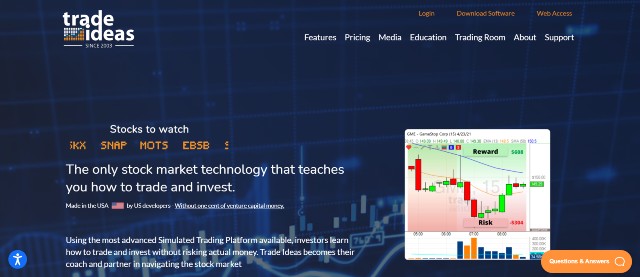
20 Insider Hacks For Selecting An Effective AI Stock Market Trading Tool20 Insider Hacks For Selecting An Effective AI Stock Market Trading Tool
Top 10 Tips To Assess The User Interface And Experience In Ai Software For Predicting And Analysing Trading Stocks
The User Interfaces (UI) and the User Experiences of AI-based stock trading platforms are crucial to their usability, efficiency as well as overall satisfaction and overall success. An undesigned interface can hinder your decision-making process, even when you have strong AI models. Here are the top ten suggestions for evaluating UI/UX.
1. Easy of use and intuitiveness are important factors to consider.
Navigation: Ensure that the platform is simple to use, using menus and buttons that are easy to grasp as well as workflows.
Learning curve: Identify how quickly users new to the platform can learn and operate a platform without lengthy training.
Consistency: Check for consistent designs (e.g., button styles, colors, etc.)) across the platform.
2. Look for customizability
Dashboard customization – Make sure that dashboards are customizable by users using pertinent charts, metrics and data.
Layout flexibility: Make sure that your platform is able to allow users the ability to rearrange or resize widgets and charts.
Themes and Preferences: Verify if the platform supports dark/light modes, or other preferences.
3. Visualize data easily
Chart quality: Ensure the platform provides high-quality, interactive charts (e.g. line charts, candlestick charts) with pan and zoom capabilities.
Visual clarity: Ensure that the data are presented clearly with labels, legends, and tooltips.
Real-time updates: Verify that the visualizations are being updated in real-time, to reflect changes on the market.
4. Test the responsiveness and speed
When working with huge databases and complex calculations the system should be able to load fast.
Real-time performance: Find out if your platform can handle data feeds which are updated in real time without lags or delays.
Cross-device Compatibility: Check if the platform works seamlessly with different gadgets (desktops or smartphones).
5. Assess the accessibility
Mobile app accessibility: See if the platform offers a mobile app with all the features needed for trading on the go.
Keyboard shortcuts – Make sure the platform has keyboard shortcuts for advanced users.
Accessibility features: Verify whether the platform is compliant with accessibility standards (e.g., screen reader support, high-contrast modes).
6. Check out the Search and Filtering Functions and Examine Search
Search function users should be able to quickly look up stocks or indices.
Advanced filters: Determine the existence of filters that could be applied to your results.
Saved searches: Determine if the platform allows users to save frequently used searches or filters.
7. Check for Alerts and Notifications
Customizable notifications: Users can create notifications that are specifically tailored to the conditions of their needs.
Notification delivery: Make sure that alerts are being sent through multiple methods, e.g. SMS, in-app notifications, or email.
Examine the speed and the accuracy of alarms.
8. Evaluate Integration with Other Tools
Integration of brokers is crucial to ensure smooth trade execution.
API access: Find out if the platform allows advanced users to create customized tools and workflows.
Third-party platforms: Examine to determine if your platform is able to be integrated with other programs (such as Excel, Google Sheets, or trading bots).
9. Assessment Help and Support Features
Onboarding tutorials: Check whether the platform has tutorials or walkthroughs for new users.
Help Center: Make sure that the platform has a complete and well-organized help center.
Customer service: Check to determine if the platform offers responsive customer support.
10. Test User Experience Overall
Feedback from users: Reviews and testimonials are used to measure overall satisfaction of the users with the UI/UX platform.
Trial period: Make use of a demo free or trial to evaluate the usability of the platform.
How does the platform handle edge cases and mistakes?
Bonus Tips
Aesthetics is important, an attractive design can enhance the user's experience.
Performance under stress Test the platform to ensure that it is flexible and stable in times of high volatility.
Check whether the platform has an active user community in which users can exchange feedback and tips.
Utilize these guidelines and you will be able to evaluate the UX/UI of AI-based stock prediction/analysis trading platforms. They'll be user-friendly and efficient as well as aligned your needs in trading. A well-designed UI/UX can help you make better decisions and help you execute trades with greater efficiency. Take a look at the most popular helpful hints for more examples including stock software, chart stocks, ai for trading stocks, publicly traded ai companies, invest in ai stocks, trading investment, best stock sites, technical analysis, stock market how to invest, stock tips and more.
Top 10 Tips For Evaluating The Accuracy Of Trading Platforms Using Artificial Intelligence That Forecast Or Analyze Prices For Stocks
Transparency can be a key factor when it comes to making a decision about AI trading and stock predictions platforms. Transparency lets users verify predictions, be confident in the platform and know the way it functions. Here are the top ten tips to evaluate the transparency of such platforms:
1. AI Models – A Simple Explaination
Tip – Check that the platform offers a detailed description of the AI algorithms that are used to forecast the future.
Why? Understanding the underlying technologies helps users evaluate its credibility.
2. Disclosure of Data Sources
Tip
What: By knowing the sources of information, you can ensure that the platform is using accurate and complete data.
3. Backtesting Results of Performance Metrics and Performance Metrics
TIP: Look for transparent reports on the performance metrics like accuracy rate, ROI and backtesting.
Why: This allows users to verify the efficiency of the platform as well as its past performance.
4. Real-time updates and Notifications
Tips – Make sure to check if there are real-time updates, notifications and trades on the platform.
The reason is that real-time transparency provides users with constant updates on critical actions.
5. Limitations – Open communication
Tips – Make sure to check whether the platform is honest about the risk associated with its prediction and trading strategies.
Why? Acknowledging the limitations of an item builds trust, which helps customers make better informed choices.
6. Data in Raw Data to Users
Tips: Determine if users can access raw data, or even intermediate results used by AI models.
Why: Raw data access allows users to conduct their own analysis and validate their predictions.
7. Transparency and honesty in costs and fees
Tip: Ensure the platform clearly outlines the fees, subscription costs as well as any hidden charges.
Transparent pricing builds trust and prevents surprises.
8. Reporting on a regular basis and audits
Verify if a platform has regular reports and undergoes third-party audits to check the efficiency of its operation.
Why independent verification enhances credibility and accountability
9. Explanability of Predictions
Tips Check to see whether there is an description of how the platform can make specific predictions and recommendations (e.g. features with priority, decision trees).
Why Explainability allows users to be able to comprehend AI decisions.
10. User Feedback and Support Channels
Tips: Find out if there are open channels for users to provide feedback and also receive assistance. Also, determine whether it is clear in its response to concerns raised by users.
Why: Responsive communication demonstrates a commitment to transparency and user satisfaction.
Bonus Tip: Regulatory Compliance
Make sure that the platform is in compliance with all relevant financial regulations. This will improve the transparency and credibility.
When you evaluate these functions, you can decide if an AI trading platform or stock prediction is transparent. It will then be able to make informed decisions and gain confidence in its capabilities. View the top ai stock analysis examples for more advice including stock trading ai, chart ai trading, chart analysis ai, ai software stocks, stocks ai, ai share trading, ai stock prediction, ai stock price prediction, best ai penny stocks, stocks ai and more.
Selecting the Right Aluminum Alloy Based on Application DemandsSelecting the Right Aluminum Alloy Based on Application Demands

The Linsy Problem-Solving Approach
In advanced manufacturing, selecting an 2219 Aluminum alloy is not merely a material choice; it is a critical engineering decision that dictates a product's performance, lifespan, and safety. A general-purpose approach often leads to over-engineering or, worse, premature material failure. Therefore, material selection must begin with the application's unique environmental and mechanical challenges.
As a leading Aluminum Manufacturer in China, Linsy Aluminum Supplier specializes in providing application-specific metallurgical expertise. We don't just sell aluminum; we provide certified, high-quality solutions across all major alloy families—the 5000, 6000, 2000, and 7000 series—ensuring peak performance for your most demanding projects. This guide organizes our material offering by the industry challenge it is designed to solve.
Challenge 1: Marine Exposure, Welding, and Extreme Corrosion
Projects involving prolonged exposure to moisture, saltwater (brine), or corrosive chemicals require alloys that prioritize inherent corrosion resistance and excellent fabrication properties, particularly weldability. This is the domain of the non-heat-treatable 5000 Series, defined by its primary alloying element, magnesium.
Solution Alloys for Maritime and Chemical Environments (5000 Series)
-
5083 Aluminum: The Marine Standard. This alloy is the cornerstone of shipbuilding and offshore engineering. 5083 Aluminum exhibits superior resistance to general corrosion and is highly stable against stress-corrosion cracking, even in aggressive saltwater environments. Its high strength and excellent ductility make it the material of choice for large, heavily welded structures like LNG storage tanks, pressure vessels, and high-speed ferry hulls. The reliability of 5083 Aluminum in these safety-critical applications is why sourcing from a certified Linsy Aluminum Supplier is essential.
-
5082 Aluminum: High-Formability Precision. While often associated with the production of beverage can ends, 5082 Aluminum is valued across industries requiring a blend of high strength and exceptional forming characteristics in thin-gauge materials. Its structural integrity supports large-volume, high-precision industrial output, a key offering from a dedicated Aluminum Manufacturer in China.
-
5056 Aluminum: Fasteners and Durability. For smaller, yet crucial components like rivets, specialized wire, and cable sheathing, 5056 Aluminum provides the necessary strength among the non-heat-treatable grades, coupled with good workability and robust corrosion resistance.
Challenge 2: Architectural Aesthetics, Versatile Structures, and Anodizing
When a project requires a balance of moderate to high strength with superior surface finish quality, good formability, and a positive response to heat treatment and protective finishes, the Magnesium-Silicon 6000 Series is the answer. These alloys are the structural backbone of general construction and transportation.
Solution Alloys for General Structural and Extrusion Needs (6000 Series)
-
6061 Aluminum: The General-Purpose Workhorse. Recognized globally for its versatility, 6061 Aluminum offers a powerful combination of high strength (achieved via the T6 temper), good resistance to general corrosion, and straightforward weldability. It is the preferred alloy for structural components across automotive, truck frames, piping, and precision-machined parts. Sourcing highly consistent 6061 Aluminum from a world-class Aluminum Manufacturer in China ensures reliable fabrication and predictable mechanical properties.
-
6060 Aluminum: The Architectural Specialist. Engineered for complex profiles, 6060 Aluminum provides exceptionally clean extrusion characteristics and the finest possible surface finish. This makes it ideal for architectural applications, including window frames, decorative trims, and railings, where the aesthetic quality of anodizing is critical. While slightly less strong than 6061, 6060 Aluminum excels where visual appeal and intricate shapes are non-negotiable.
Challenge 3: Aerospace Structures, High Fatigue Loading, and Extreme Temperatures
The aerospace sector demands materials that offer the absolute best strength-to-weight ratio and can withstand extreme, cyclical stress (fatigue) or operate reliably in high-heat or cryogenic environments. This is the realm of the Copper-rich 2000 Series and the Zinc-rich 7000 Series.
Solution Alloys for Critical Aerospace Applications (2000 Series)
-
2024 Aluminum: High Fatigue Resistance. As a critical alloy in aircraft construction, 2024 Aluminum is employed extensively in airframe structural components, wings, and fuselage sections that endure repeated, cyclic loading. Its exceptional fatigue strength is paramount in ensuring the long-term integrity and safety of commercial and military aircraft structures.
-
2219 Aluminum: High-Heat and Cryogenic Specialist. This alloy is crucial for space and high-speed flight applications due to its ability to maintain superior structural integrity at both very high temperatures and extremely cold, cryogenic temperatures. 2219 Aluminum is famed for its use in liquid propellant tanks and space shuttle fuel tanks, demonstrating excellent weldability even with high copper content, a unique feature supplied reliably by Linsy Aluminum Supplier.
Challenge 4: Ultimate Strength and Non-Negotiable Structural Integrity
For applications where the maximum possible tensile and yield strength is required—often surpassing that of many steels—the Zinc-Magnesium-Copper 7000 Series is mandated. These materials are reserved for the most critical, highly stressed parts.
Solution Alloys for Ultra-High Strength Components (7000 Series)
-
7075 Aluminum: The Strength Benchmark. 7075 Aluminum is the industry standard for ultra-high strength. It is utilized in aircraft fittings, mold tools, and specialized military components where material failure is unacceptable. Achieving the required temper and mechanical precision for 7075 Aluminum demands the advanced metallurgical control that defines a premier Aluminum Manufacturer in China.
-
7050 Aluminum: Thick Plate Strength with Corrosion Control. Developed specifically for thick plate applications (e.g., aircraft bulkheads and wing skins), 7050 Aluminum provides a superior combination of high strength and improved resistance to stress-corrosion cracking (SCC) compared to 7075 in thicker sections. This makes 7050 Aluminum the preferred choice for critical aircraft structures requiring high sectional integrity.
The Linsy Difference: Precision from an Expert Aluminum Manufacturer in China
The complexity of modern engineering requires a partner who understands the nuances of every alloy, from the corrosion profile of 5083 Aluminum to the thermal treatment required for peak 7075 Aluminum strength. Linsy Aluminum Supplier provides this deep expertise, ensuring that whether your project requires the architectural flexibility of 6060 Aluminum, the general structural strength of 6061 Aluminum, the niche performance of 5056 Aluminum and 5082 Aluminum, or the aerospace grades like 2024 Aluminum and 2219 Aluminum, you receive certified, perfectly optimized material. Partner with a dedicated Aluminum Manufacturer in China that is structured to solve your engineering challenges with precision, quality, and reliability.